
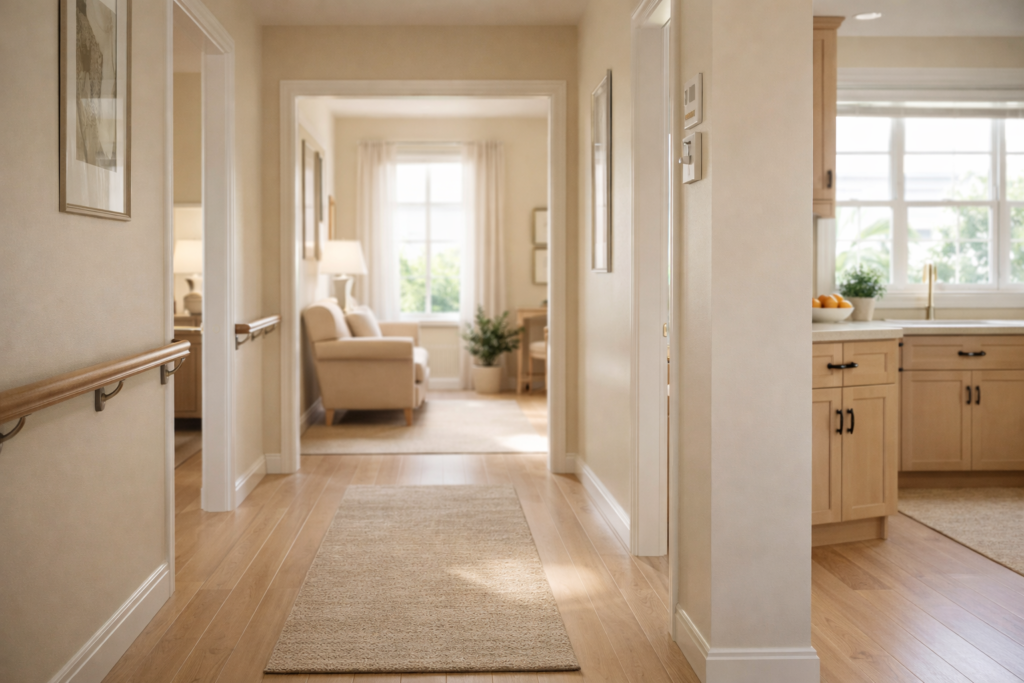
As we age, our homes should continue to be places of comfort, independence, and security. Yet many everyday living spaces contain hidden risks for seniors if they are not thoughtfully adapted. Falls, poor lighting, and accessibility challenges are among the most common causes of injury for older adults, but many of these risks are preventable with simple, proactive changes.
Whether you are planning to age in place yourself, supporting a parent, or caring for a loved one, these home safety tips can help create a safer and more confident living environment.
Prevent Falls Before They Happen
Falls remain the leading cause of injury among seniors, but small adjustments can significantly reduce risk. Clear, unobstructed pathways are essential. Walkways should be free of clutter, cords, and unstable furniture, and loose rugs should either be removed or secured with non-slip backing.
Staircases should have sturdy handrails on both sides, and bathrooms should include grab bars near toilets and showers. Non-slip mats in tubs and showers add another layer of protection. Footwear also matters. Supportive, non-slip shoes are far safer than socks or loose slippers on smooth floors.
Improve Lighting Throughout the Home
Good lighting supports both visibility and confidence, especially for seniors with reduced vision. Dim or uneven lighting can increase the risk of trips and falls.
Hallways, staircases, entrances, and kitchens should be well lit. Night lights in bedrooms, bathrooms, and corridors make nighttime movement safer. Motion-sensor lights can be particularly helpful in stairways and entry points, and light switches should be easy to reach from doorways and beds.
Bright, evenly lit spaces reduce eye strain and help seniors move through their homes with greater ease.
Make Bathrooms Safer and More Accessible
Bathrooms are one of the highest-risk areas in any home, but they are also one of the easiest spaces to improve.
Installing proper grab bars instead of relying on towel racks provides reliable support. Walk-in showers or low-threshold tubs reduce the risk of slipping, while raised toilet seats and shower chairs make transfers safer and more comfortable. These upgrades not only reduce the risk of injury, they also help seniors maintain independence and dignity.
Keep Emergency Preparedness Top of Mind
Being prepared for emergencies offers peace of mind for both seniors and their families. Phones should be kept within reach in main living areas and bedrooms, and emergency contact numbers should be posted in visible locations.
Medical alert systems or wearable emergency devices can provide an added layer of safety, especially for seniors who live alone. Smoke detectors and carbon monoxide alarms should be tested regularly, and emergency plans should be reviewed so everyone knows what to do if help is needed.
Improve Kitchen Safety
The kitchen is a high-traffic area where accidents can easily happen if the space is not well organized. Frequently used items should be stored at waist or shoulder height to reduce bending and reaching.
Appliances with automatic shut-off features add protection, while clear, well-lit countertops make food preparation safer. Easy-grip handles on drawers and cabinets can reduce strain and improve usability for those with arthritis or limited hand strength.
Plan for Accessibility and Mobility Needs
Homes should adapt as needs change over time. Simple updates can make a meaningful difference.
Lever-style door handles are easier to use than traditional knobs. Wider walkways allow room for mobility aids, and no-step entries or ramps can improve access at entrances. Lowered light switches and raised electrical outlets can also reduce unnecessary reaching or bending.
Planning ahead allows seniors to remain in their homes longer, more comfortably, and with fewer disruptions later on.
Schedule Regular Home Safety Check-Ins
A home that was once safe may need updates as health or mobility changes. Conducting a home safety review at least once a year is a good habit, especially after any injury or change in physical ability.
A trusted family member or professional can help identify risks that may be easy to overlook. Prevention is always easier and less stressful than recovery.
Final Thoughts
A safe home is the foundation of independent living and peace of mind. With thoughtful planning and a few strategic updates, seniors can continue enjoying their homes while reducing risks and staying connected to their communities.
If you or a loved one are considering changes to support aging in place, or exploring housing options better suited to evolving needs, having the right information and guidance can make all the difference. Safety, comfort, and independence matter at every stage of life.